
Stephen Hawking God & Religion quotes
The following image appeared in The Economist magazine in early September, 2010, in association with the release of Stephen Hawkings' work The Grand Design (which was actually co-authored with another physicist named Leonard Mlodinow).
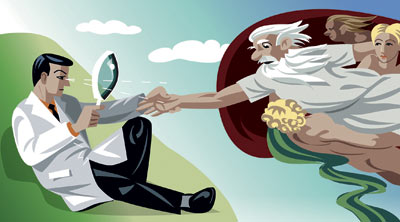
It is a "Scientific-Rationalist" parody of an original that appears on the ceiling of Rome's Cistine Chapel.
Michelangelo's - The Creation of Adam - was painted circa 1511 :-
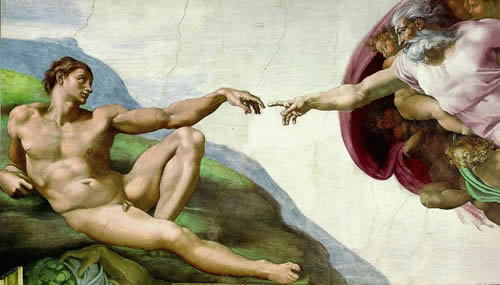
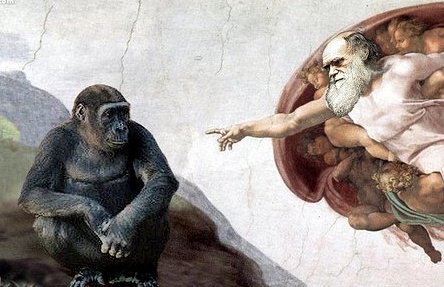
Michelangelo's - The Creation of Adam is, in fact, often parodied :-
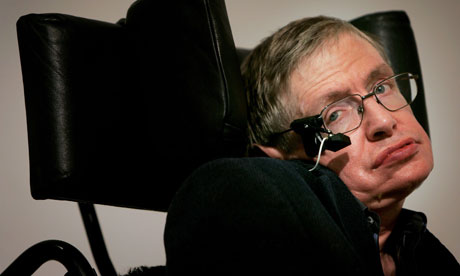
Professor Stephen Hawking is one of the most famous physicists of recent times.
The Times of London issue of 2 September 2010, a week prior to the publication of ~ The Grand Design ~ (and some two weeks prior to an high-profile papal visit to Britain), made front page news of Stephen Hawkings upcoming work and of his views on God and Creation. As can be seen in the following picture of the headline section of 'The Times' front page on the day in question:-
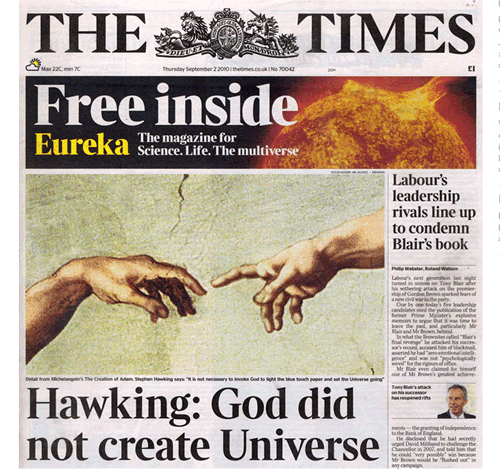
The Times article then continues:-
Modern physics leaves no place for God in the creation of the Universe, Stephen
Hawking has concluded.
Just as Darwinism removed the need for a creator in the sphere of biology, Britain's most eminent scientist argues that a new series of theories have rendered redundant the role of a creator for the Universe.
In his forthcoming book, an extract from which is published exclusively in Eureka, published today with The Times, Professor Hawking sets out to answer the question: "Did the Universe need a creator?" The answer he gives is a resounding "no".
Far from being a once-in-a-million event that could only be accounted for by extraordinary serendipity or a divine hand, the Big Bang was an inevitable consequence of the laws of physics, Hawking says.
Just as Darwinism removed the need for a creator in the sphere of biology, Britain's most eminent scientist argues that a new series of theories have rendered redundant the role of a creator for the Universe.
In his forthcoming book, an extract from which is published exclusively in Eureka, published today with The Times, Professor Hawking sets out to answer the question: "Did the Universe need a creator?" The answer he gives is a resounding "no".
Far from being a once-in-a-million event that could only be accounted for by extraordinary serendipity or a divine hand, the Big Bang was an inevitable consequence of the laws of physics, Hawking says.

There was widespread publicity about the new book in early September, 2010, with many print and on-line media outlets covering the story.
A page that appeared on the BBC website on 2 September, 2010, the day the story about the imminent publication of The Grand Design made headline news, featured these quotes as background text:-
There is no place for God in theories on the creation of the Universe, the physicist and mathematician Professor Stephen Hawking has said.
He had previously argued that belief in a creator was not incompatible with science - but in a new book The Grand Design, he concludes that the Big Bang was an inevitable consequence of the laws of physics.
The following quotation, delivered by Stephen Hawking during a very brief appearance on an accompanying on-line video about the new book, was
explicitly announced, by the presenter of this news item, to be The Key Conclusion of The Grand Design:-
He had previously argued that belief in a creator was not incompatible with science - but in a new book The Grand Design, he concludes that the Big Bang was an inevitable consequence of the laws of physics.
"Because there are laws such as gravity, the universe can and will create itself from nothing. It is not necessary to invoke God to light
the blue touch paper and set the Universe going."
But! If readers have the time ~ also of interest perhaps?
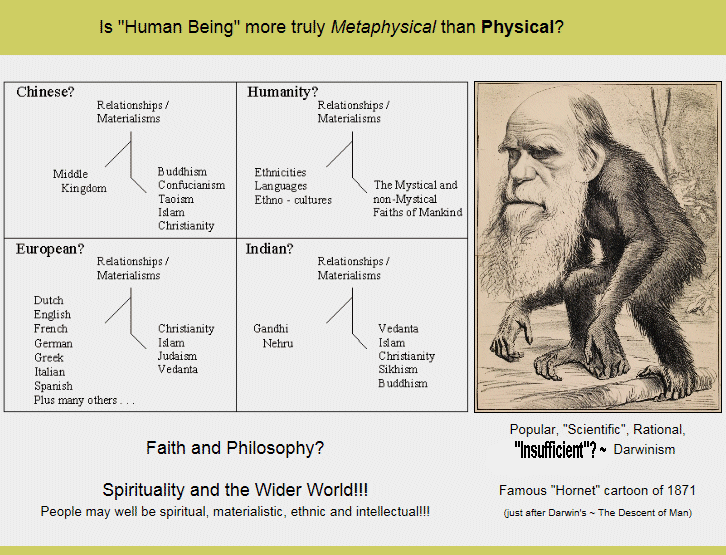
Metaphysics is a fascinating subject - all be it one that can variously challenge traditions of theism, and of atheism.
Ralph Waldo Emerson
RALPH WALDO EMERSON (1803-1882) was, in his time, the leading voice of intellectual culture in the United States. He remains widely influential to this day through his essays, lectures, poems, and philosophical writings.In the later eighteen-twenties Ralph Waldo Emerson read, and was very significantly influenced by, a work by a French philosopher named Victor Cousin.
A key section of Cousin's work reads as follows:
"What is the business of history? What is the stuff of which it is made? Who is the personage of history? Man : evidently man and human nature.
There are many different elements in history. What are they? Evidently again, the elements of human nature. History is therefore the development of humanity,
and of humanity only; for nothing else but humanity develops itself, for nothing else than humanity is free. …
… Moreover, when we have all the elements, I mean all the essential elements, their mutual relations do, as it were, discover themselves. We draw from the nature of these different elements, if not all their possible relations, at least their general and fundamental relations."
Introduction to the History of Philosophy (1829)
… Moreover, when we have all the elements, I mean all the essential elements, their mutual relations do, as it were, discover themselves. We draw from the nature of these different elements, if not all their possible relations, at least their general and fundamental relations."
Introduction to the History of Philosophy (1829)
Even before he had first read Cousin, (in 1829), Emerson had expressed views in his private Journals which suggest that he accepted that Human Nature, and Human Beings, tend to display three identifiable aspects and orientations:
Imagine hope to be removed from the human breast & see how Society will sink, how the strong bands of order & improvement will be relaxed & what a deathlike stillness would take the place of the restless energies that now move the world. The scholar will extinguish his midnight lamp, the merchant will furl his white sails & bid them seek the deep no more. The anxious patriot who stood out for his country to the last & devised in the last beleagured citadel, profound schemes for its deliverance and aggrandizement, will sheathe his sword and blot his fame. Remove hope, & the world becomes a blank and rottenness.
(Journal entry made between October and December, 1823)
In all districts of all lands, in all the classes of communities thousands of minds are intently occupied, the merchant in his compting house, the mechanist over his plans, the statesman at his map, his treaty, & his tariff, the scholar in the skilful history & eloquence of antiquity, each stung to the quick with the desire of exalting himself to a hasty & yet unfound height above the level of his peers. Each is absorbed in the prospect of good accruing to himself but each is no less contributing to the utmost of his ability to fix & adorn human civilization. (Journal entry of December, 1824)
Our neighbours are occupied with employments of infinite diversity. Some are intent on commercial speculations; some engage warmly in political contention; some are found all day long at their books … (This dates from January - February, 1828)
In all districts of all lands, in all the classes of communities thousands of minds are intently occupied, the merchant in his compting house, the mechanist over his plans, the statesman at his map, his treaty, & his tariff, the scholar in the skilful history & eloquence of antiquity, each stung to the quick with the desire of exalting himself to a hasty & yet unfound height above the level of his peers. Each is absorbed in the prospect of good accruing to himself but each is no less contributing to the utmost of his ability to fix & adorn human civilization. (Journal entry of December, 1824)
Our neighbours are occupied with employments of infinite diversity. Some are intent on commercial speculations; some engage warmly in political contention; some are found all day long at their books … (This dates from January - February, 1828)
The quotes from Emerson are reminiscent of a line from another "leading voice of intellectual culture" - William Shakespeare.
There's neither honesty, manhood, nor good fellowship in thee.
William Shakespeare: Henry IV (Pt 1), Act I, Scene II
William Shakespeare: Henry IV (Pt 1), Act I, Scene II
"The first glance at History convinces us that the actions of men proceed from their needs, their passions, their characters and talents; and impresses us with the belief that such needs, passions and interests are the sole spring of actions."
Georg Hegel, 1770-1831, German philosopher, The Philosophy of History (1837)
Plato, Socrates and Shakespeare endorse a 'Tripartite Soul' view of Human Nature. Platos' Republic
Understanding the Past and Present. Why is the World the way it is today?
Understanding the Past and Present. Why is the World the way it is today?
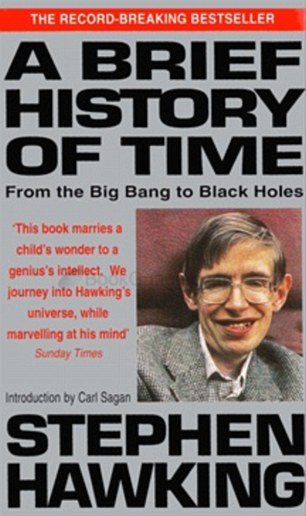 An earlier and quite famous work by Stephen Hawking - A Brief History of Time - contains several revealing quotes on God and Religion.
"As we shall see, the concept of time has no meaning before the beginning of the universe. This was first pointed out by St. Augustine. When asked: What did God do before he created the universe? Augustine didn't reply: He was preparing Hell for people who asked such questions. Instead, he said that time was a property of the universe that God created, and that time did not exist before the beginning of the universe."
Stephen Hawking, A Brief History of Time (New York: Bantam, 1988), p. 8
"One can imagine that God created the universe at literally any time in the past. On the other hand, if the universe is expanding, there may be physical reasons why there had to be a beginning. One could imagine that God created the universe at the instant of the big bang, or even afterwards in just such a way as to make it look as though there had been a big bang, but it would be meaningless to suppose that it was created before the big bang. An expanding universe does not preclude a creator, but it does place limits on when he might have carried out his job!"
A Brief History of Time (New York: Bantam, 1988), pp. 8-9.
"With the success of scientific theories in describing events, most people have come to believe that God allows the universe to evolve according to a set of laws and does not intervene in the universe to break these laws. However, the laws do not tell us what the universe should have looked like when it started -- it would still be up to God to wind up the clockwork and choose how to start it off. So long as the universe had a beginning, we could suppose it had a creator. But if the universe is really completely self-contained, having no boundary or edge, it would have neither beginning nor end: it would simply be. What place, then, for a creator?"
A Brief History of Time (New York: Bantam, 1988), p. 140-41.
"However, if we discover a complete theory, it should in time be understandable by everyone, not just by a few scientists. Then we shall all, philosophers, scientists and just ordinary people, be able to take part in the discussion of the question of why it is that we and the universe exist. If we find the answer to that, it would be the ultimate triumph of human reason -- for then we should know the mind of God."
A Brief History of Time - (page 193 - actually the concluding paragraph!)
In a later work Black Holes and Baby Universes and other Essays Stephen Hawking revealed that A Brief History of Time remained on the bestseller list of The New York Times for fifty-three weeks, that as of February 1993 it had been on The Sunday Times best seller list for 205 weeks, and that translations into 33 languages other than English had already been published.
Also in Black Holes and Baby Universes, Hawking goes so far as to attribute a marked increase in sales to this - discovery of a complete theory of everything means knowing the mind of God - quotation which was probably from his point a view nothing more than a metaphor indicative of an understanding of the universe which was complete and objective.
"In the proof stage I nearly cut the
last sentence in the book... Had I done so, the sales might have been halved."
As sales of A Brief History of Time currently stand at over nine million copies Prof. Stephen decision not to edit out that sentence
may have had notable consequences!
Stephen Hawking, alongside holding skeptical views on God and Religion, is also deeply skeptical about the value of Philosophy!!!
He even goes so far in 'The Grand Design' as to suggest that "Philosophy is Dead".
Chapter I ~ The Mystery of Being ~ actually begins on this theme:-
We each exist for but a short time, and in that time explore but a small part of the
whole universe. But humans are a curious species. We wonder, we seek answers. Living in this
vast world that is by turns kind and cruel, and gazing at the immense heavens above, people have
always asked a multitude of questions: How can we understand the world in which we find
ourselves? How does the universe behave? What is the nature of reality? Where did all this come
from? Did the universe need a creator? Most of us do not spend most of our time worrying about
these questions, but almost all of us worry about them some of the time.
Traditionally these are questions for philosophy, but philosophy is dead. Philosophy has not kept up with modern developments in science, particularly physics. Scientists have become the bearers of the torch of discovery in our quest for knowledge. The purpose of this book is to give the answers that are suggested by recent discoveries and theoretical advances. They lead us to a new picture of the universe and our place in it that is very different from the traditional one, and different even from the picture we might have painted just a decade or two ago.
Traditionally these are questions for philosophy, but philosophy is dead. Philosophy has not kept up with modern developments in science, particularly physics. Scientists have become the bearers of the torch of discovery in our quest for knowledge. The purpose of this book is to give the answers that are suggested by recent discoveries and theoretical advances. They lead us to a new picture of the universe and our place in it that is very different from the traditional one, and different even from the picture we might have painted just a decade or two ago.
At Age-of-the-Sage we see relevance in God, Religion and Philosophy!!!
"Human Being" seems
to be rather "Tripartite"
It is widely known that Plato, pupil of and close friend to Socrates, accepted that Human
Beings have a " Tripartite Soul " where the individual Human Psyche is noticeably composed of three aspects -
Wisdom-Rationality, Spirited-Will and Appetite-Desire.
What is less widely appreciated is that such major World Faiths as Christianity, Islam, Hinduism, Buddhism and Sikhism see "Spirituality" as being relative to "Desire" and to "Wrath".
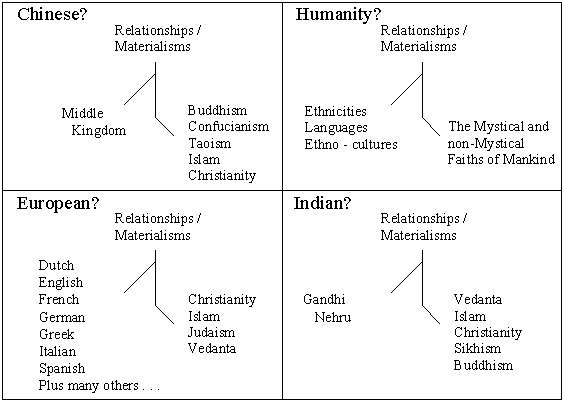
A possible "Tripartism" to Human Be-ing
A collection of authoritative key insights is available ~ here, ~ at Age-of-the-Sage,
(from the Great Faiths, Plato, Socrates, Pythagoras, Shakespeare and Emerson!!!),
that give convincing support to such a view of Human Nature!!!
Believe it or not even Modern Psychological Science seems to agree with such a view!!!
"You will hear things like, "Science doesn't know everything." Well, of course science doesn't know everything. But,
because science doesn't know everything, it doesn't mean that science knows nothing. Science knows enough for us to
be watched by a few million people now on television, for these lights to be working, for quite extraordinary
miracles to have taken place in terms of the harnessing of the physical world and our dim approaches towards
understanding it. And as Wittgenstein quite rightly said, "When we understand every single secret of the universe,
there will still be left the eternal mystery of the human heart."
Stephen Fry quoting Wittgenstein during a Room 101 TV program
Stephen Fry quoting Wittgenstein during a Room 101 TV program
More science-related quotes unsympathetic towards explanations of existence associated with religion attributed to Professor Stephen Hawking will now be presented:-
"What I have done is to show that it is possible for the way the universe began to be determined by the laws of science. In that case, it would not be necessary to appeal to God to decide how the universe began. This doesn't prove that there is no God, only that God is not necessary."
Der Spiegel (17 October 1988)
In October 2001 an article appeared in the London-based Telegraph newspaper wherein Prof. Hawking was represented as being interviewed "about life, the universe and everything".
In this article the Prof. was asked the following:-
You use God as a metaphor for the laws of nature but, from what I remember, you are not religious in any way. Is this still the case?
And Prof. Hawkings reply was:- "If you believe in science, like I do, you believe that there are certain laws that are always obeyed. If you like, you can say the laws are the work of God, but that is more a definition of God than a proof of his existence."
In June of 2010 Channel 4 aired a series themed as "Genius of Britain" where, according to Stephen Hawking, several British figures prominent in scientific fields sought "to tell the stories of the British scientists who changed the world, and to put science back on the map."
During the recording of this series Professor Hawking was asked whether he thought God existed.
Hawkings reply, which like most of his statements had to be painstakingly pre-prepared and installed for playback through his voice synthesiser, was as follows:~
"The question is: is the way the universe began chosen by God for reasons we can't understand, or was it determined by a law of science? I believe the second. If you like,
you can call the laws of science 'God', but it wouldn't be a personal God that you could meet, and ask questions."